
Downspout Drainage for Fort Bend Clay Soil and Slab Foundations
Why dumping roof water next to your slab is a recipe for foundation failure in Fort Bend County's expansive gumbo clay. A comprehensive guide to underground PVC drainage extensions.
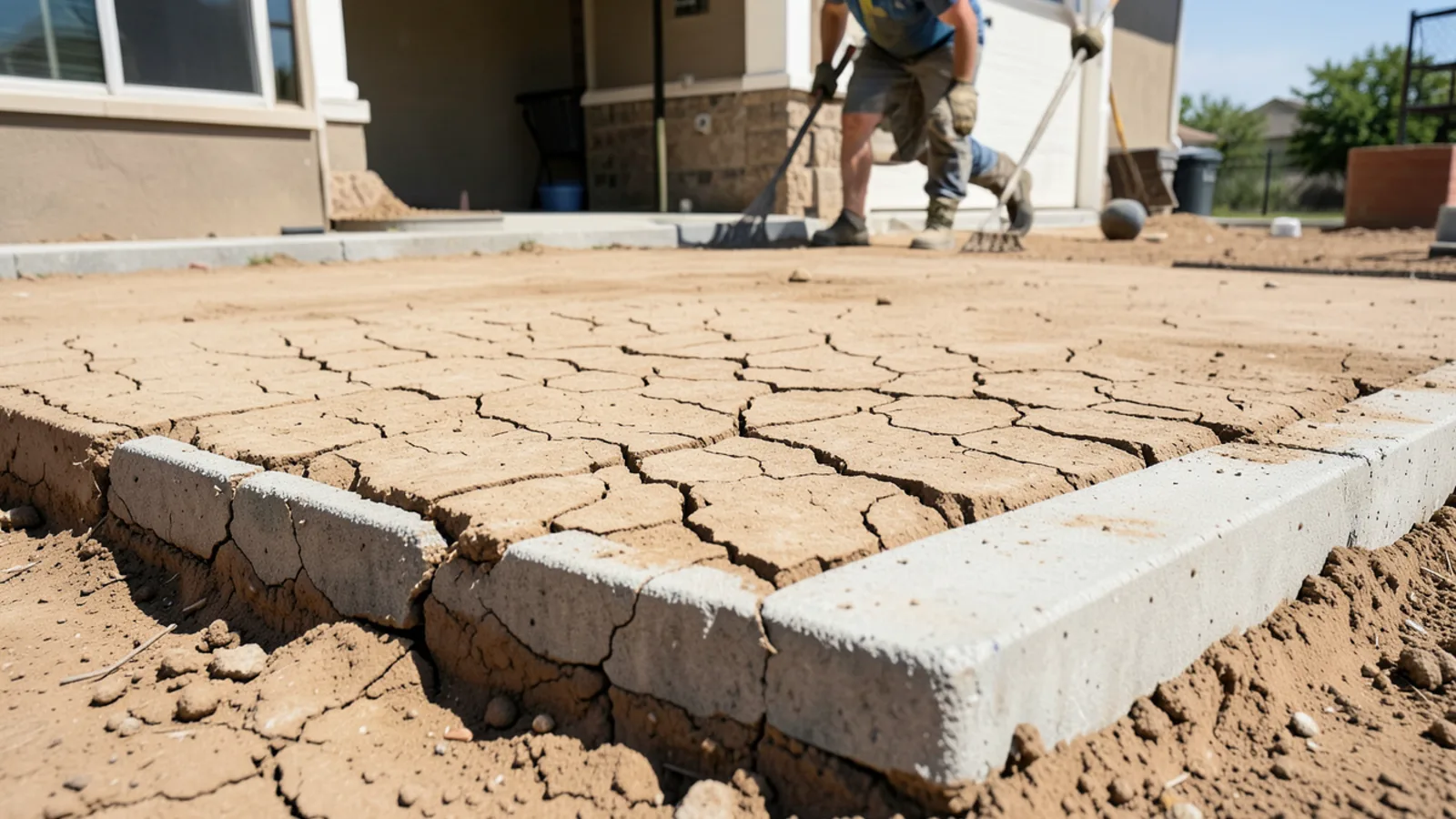
To protect a concrete slab foundation on Fort Bend County's expansive gumbo clay, roof runoff must be captured in sealed downspouts and discharged through smooth-wall rigid PVC at least 10 feet away from the slab perimeter. Dumping roof water from short splash blocks saturates localized clay, generating differential heave that cracks foundations, exterior brick, and interior drywall.
- •The Soil Science of Fort Bend Gumbo: Why Local Slabs Crack
- •Above-Ground Splash Blocks: The Engineering Failure in Texas Downpours
- •Rigid PVC vs. Corrugated Flex Pipe: The Hydro Engineering Standard
- •Why French Drains Must Never Be Mixed with Roof Downspouts
- •Engineering Pop-Up Emitters and Gravity Outfalls on Flat Prairie Lots
- •The Fort Bend Homeowner Installation and Maintenance Protocol
- •Expert Trade-Offs: Buried Downspout Systems vs. Above-Ground Extensions
- •Frequently Asked Questions
The Soil Science of Fort Bend Gumbo: Why Local Slabs Crack
Fort Bend County and western Harris County sit atop geological formations rich in smectite and montmorillonite clay minerals—locally known as 'gumbo.' These soils possess the highest shrink-swell potential of any soil classification in North America, with Plasticity Index (PI) ratings frequently exceeding 40 to 60. When soil has a plasticity index this extreme, moisture changes translate directly into massive mechanical movement.
During dry Texas summer months, this clay dehydrates, shrinks, and forms deep fissure cracks that can swallow a tape measure three feet into the ground. When the summer drought breaks and heavy Gulf frontal downpours arrive, the clay absorbs moisture and expands up to 10 to 15 percent by volume. The primary threat to residential slab-on-grade foundations is not uniform expansion, but differential movement—where one side or corner of a home swells significantly while the opposite perimeter remains dry.
When roof runoff pours onto the ground unchecked, it creates an artificial subterranean moisture plume directly adjacent to foundation grade beams. The localized swelling exerts thousands of pounds of upward hydrostatic pressure, twisting post-tensioned cable slabs, cracking exterior brick veneer, binding exterior doors, and tearing interior drywall seams.
Need Help with Your Katy Gutter Project?
Call our local technicians at (855) 633-0442 for free on-site advice, measurements, and written estimates.
Above-Ground Splash Blocks: The Engineering Failure in Texas Downpours
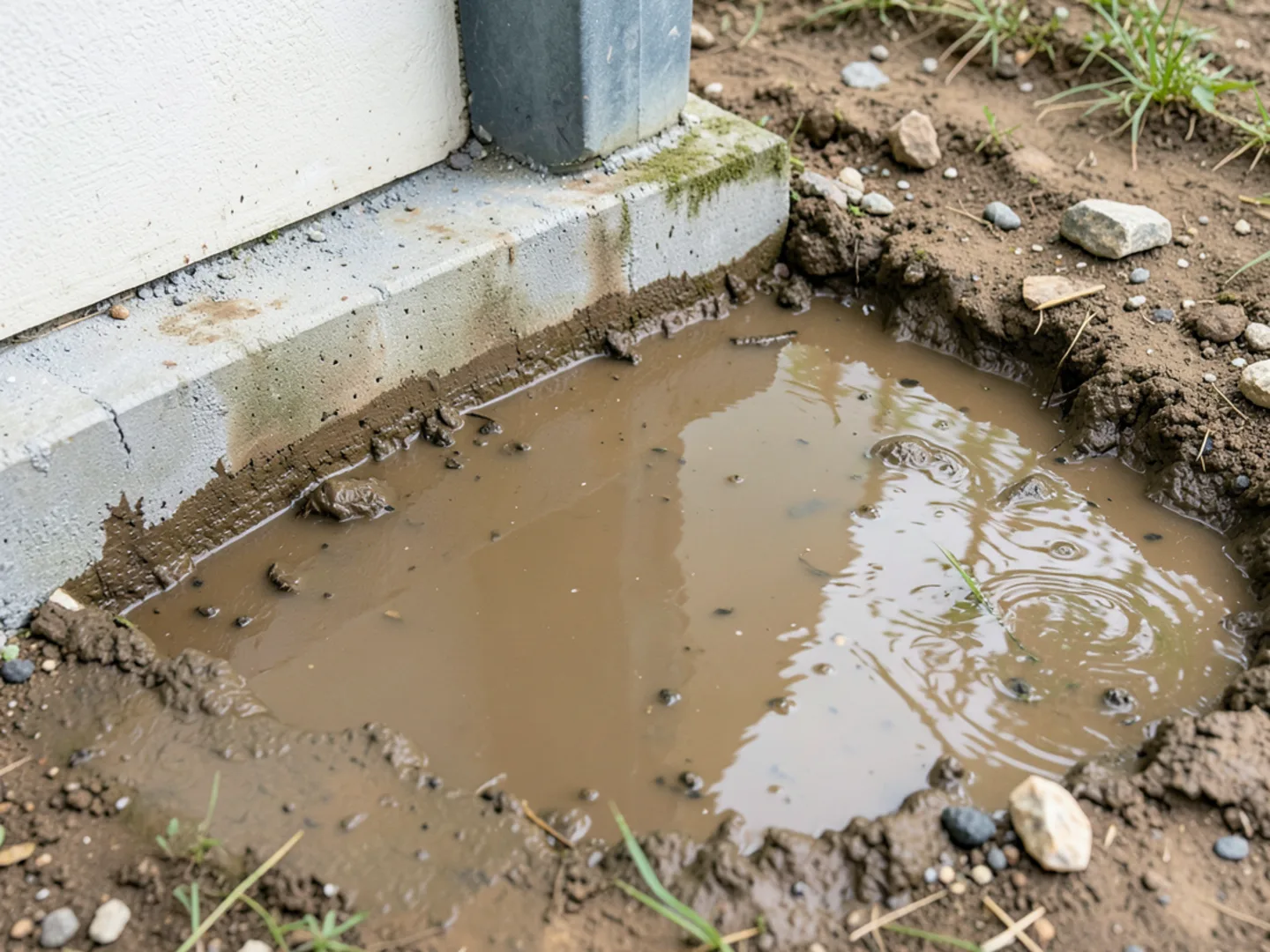
Most standard production homes in Richmond, Rosenberg, and Katy are handed over by builders with basic plastic or precast concrete splash blocks beneath downspout terminations. An above-ground splash block directs water merely 2 to 3 feet away from the wall. In the context of Gulf Coast precipitation intensity, this design is virtually useless.
Consider the rainfall hydrology: a 3,000-square-foot roof catches approximately 1,870 gallons of water for every single inch of rainfall. During a severe Fort Bend cloudburst dropping 2.5 inches in ninety minutes, more than 4,600 gallons of water drain across the roof eaves. In a home with five downspouts, each downspout discharges over 900 gallons of concentrated roof water in an hour and a half.
Dumping 900 gallons through a 2-foot splash block creates an underground saturation lens directly underneath your slab's outer grade beams. The saturated clay turns into structural slurry, losing its load-bearing capacity and allowing perimeter footings to sink when wet, then settle unevenly when summer returns. Effective foundation defense requires moving every drop of that water completely past the foundation influence boundary.
Rigid PVC vs. Corrugated Flex Pipe: The Hydro Engineering Standard
To protect residential slabs permanently, roof water must be conveyed completely outside the active foundation influence zone (a minimum of 8 to 12 feet away from the slab edge, and ideally out to the street swale or municipal curb). However, the material chosen for buried downspouts dictates whether the system lasts twenty years or fails within twenty-four months.
At Hydro Seamless Gutters, our engineering specification mandates solid, smooth-wall rigid PVC pipe (either Schedule 40 or heavy-wall SDR-35). We strictly avoid the thin, flexible black corrugated tubing commonly sold at big-box home improvement stores. In Fort Bend clay soils, corrugated flex pipe is destined for rapid failure under external compaction and tree root penetration.
| Drainage Metric | Solid Rigid PVC (Hydro Standard) | Corrugated Black Flex Pipe |
|---|---|---|
| Internal Surface Velocity | Glassy smooth interior; zero sediment friction; flushes grit effortlessly | Internal annular ridges trap shingle granules, pine needles, and decomposing silt |
| External Crush Strength | Withstands heavy commercial riding mowers, aeration machines, and clay swelling | Easily deforms, pancakes, and snaps under heavy equipment and shifting clay loads |
| Joint Integrity & Roots | Solvent-welded glued joints create an impenetrable monolithic pipe run | Friction-fit snap couplings pop apart under soil movement, inviting root penetration |
| Maintenance Cleanout | Accommodates high-pressure hydro-jetting and motorized rotary snaking blades | Mechanical snaking augers slice through thin plastic walls, permanently ruining the line |
| Slope Retention | Rigid 10-foot pipe sticks maintain constant gravity pitch across uneven trenches | Flexible coils undulate in the trench, creating standing water bellies where mosquitoes breed |
Why French Drains Must Never Be Mixed with Roof Downspouts
One of the most dangerous drainage mistakes made in Fort Bend County is connecting roof downspouts directly into a perforated French drain line. While both systems manage water, their engineering objectives are completely contradictory.
A French drain is designed to relieve surface puddling and groundwater saturation using a perforated pipe buried in a trench of washed gravel wrapped in geotextile filter fabric. It operates by allowing ambient ground moisture to seep into the pipe perforations and drain away by gravity. Conversely, downspout extensions carry high-velocity, pressurized surges of roof runoff during heavy cloudbursts.
When downspouts are plumbed into perforated French drain lines, the immense volume of roof water overwhelms the trench capacity. The excess water forces its way outward through the pipe perforations into the gravel bed, effectively injecting thousands of gallons of roof runoff directly into the subsoil right alongside your foundation. Roof runoff must always travel in a solid, unperforated pipe completely isolated from surface yard drainage.
Engineering Pop-Up Emitters and Gravity Outfalls on Flat Prairie Lots
Because western Fort Bend County features very gentle topographical slope—often less than 1 percent across an entire suburban lot—engineering adequate gravity drop for buried drainage lines requires exact laser leveling. A minimum slope of 1/8 inch per linear foot (approximately 1 foot of fall per 100 feet) is required to guarantee self-scouring flow velocity.
At the discharge terminus, we install a commercial-grade, spring-loaded pop-up relief emitter flush with the turf line. During rainstorms, hydrostatic head pressure pushes the emitter lid upward, releasing water harmlessly across the lawn or into a roadside swale. When rainfall ceases, a stainless steel internal spring closes the lid tight against the housing collar.
To prevent water from standing in the lowest elbow of the pop-up emitter between rains, Hydro installs a gravel leaching sump directly underneath the emitter base. A 1/4-inch weep hole drilled into the elbow invert allows any residual water to seep into the gravel bed within 30 minutes, preventing mosquito breeding and winter freeze expansion.
The Fort Bend Homeowner Installation and Maintenance Protocol
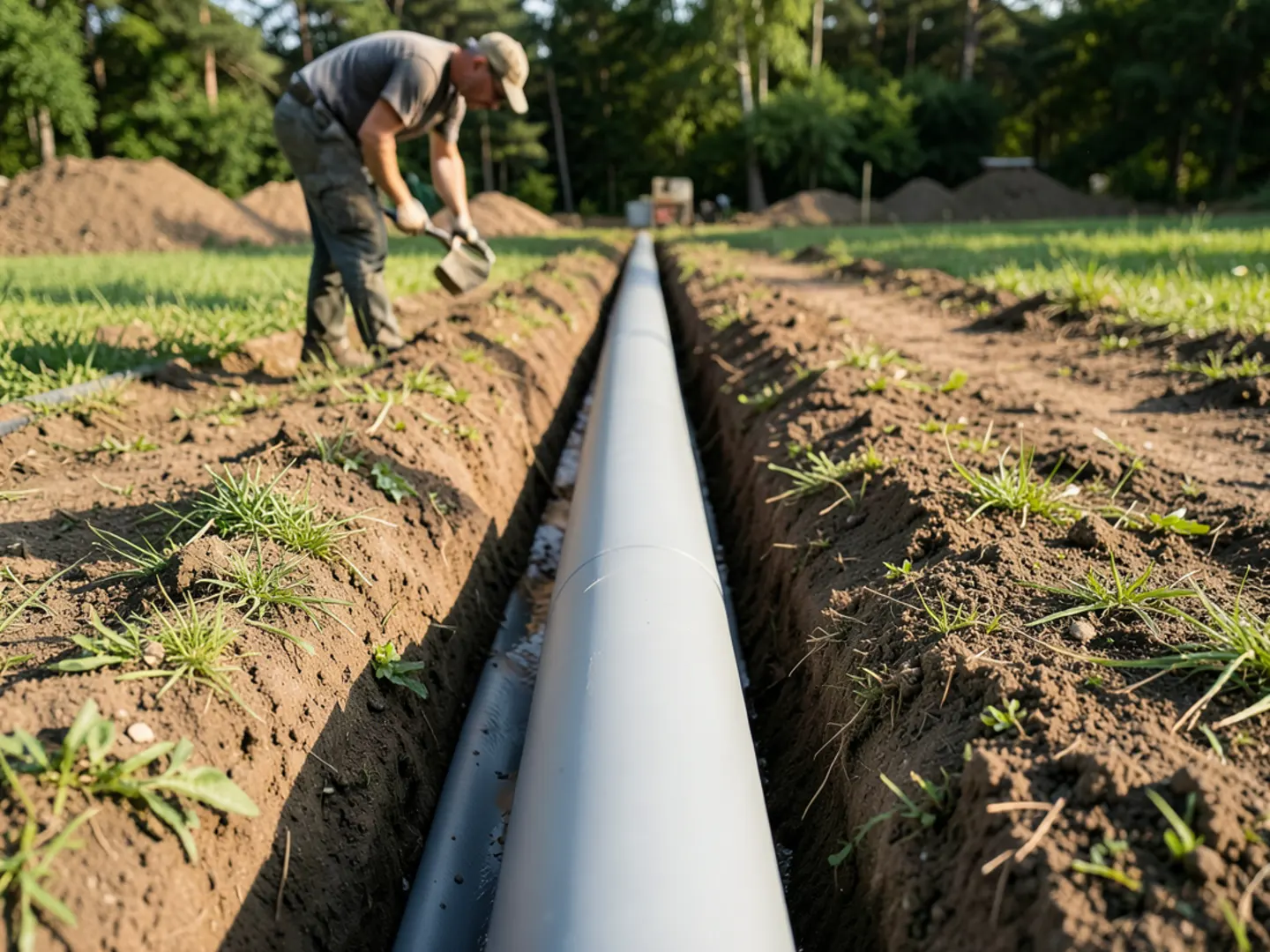
Executing a lasting subsurface drainage extension in Fort Bend clay requires methodical site prep and alignment with local utilities. We adhere to a four-stage deployment protocol on every underground installation:
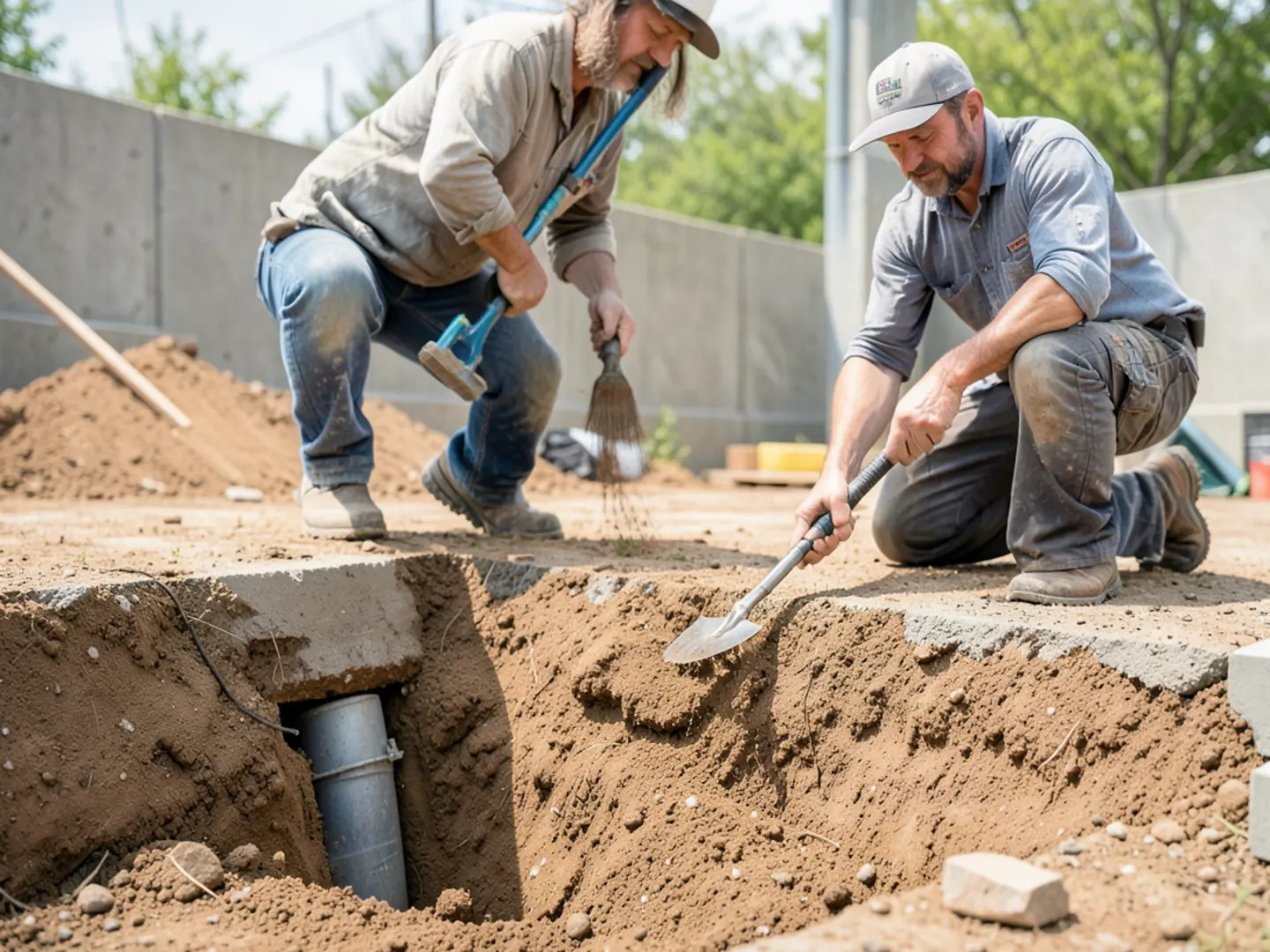
1. Underground Utility Verification: Before breaking ground, a locate ticket is called into Texas 811 to mark subterranean electrical, gas, telecom, and irrigation lines. In subdivisions like Pecan Grove, Richmond's Harvest Green, and Rosenberg, fiber optic cables and gas lines frequently cross shallow easement paths.
2. Laser-Graded Trenching & Bedding: Trenches are excavated to maintain a continuous 1/8-inch-per-foot downward grade away from the house. In expansive gumbo clay, trenches are bedded with coarse sand or pea gravel to cushion the pipe against seasonal earth heave.
3. Cleanout Adapter Installation: At the base of each gutter downspout, we install a 90-degree sweep fitting paired with a threaded surface cleanout tee. This provides instant access for garden hose flushing or camera inspection without having to dig up the lawn.
4. Twice-Annual Homeowner Check: In late autumn and early spring, unscrew the cleanout cap, run a high-pressure garden hose down the line, and confirm that the spring-loaded pop-up emitter opens smoothly and clears all shingle debris.
Expert Trade-Offs: Buried Downspout Systems vs. Above-Ground Extensions
While buried rigid PVC drainage extensions provide the ultimate foundation protection, homeowners should evaluate the operational trade-offs compared to hinged or flip-up above-ground extensions.
Buried PVC systems completely eliminate trip hazards, allow lawn mowers to pass unobstructed, satisfy the strictest master-planned HOA aesthetics, and discharge water 15 to 30 feet from the slab. However, they require higher initial capital investment and require careful excavation around existing sprinkler zones.
Above-ground extensions (such as 6-foot hinged aluminum downspout extensions) cost substantially less and require zero digging. However, they must be manually folded up before mowing, present unsightly visual clutter across landscaped flower beds, and can be kicked or detached during yard maintenance. For long-term slab stabilization in Fort Bend clay, subsurface rigid PVC remains the gold standard investment.
Frequently Asked Questions: Downspout Drainage for Fort Bend Clay Soil and Slab Foundations
Practical answers from our Katy gutter technicians and drainage specialists.
Downspouts should discharge roof runoff at least 10 feet away from the slab perimeter in Fort Bend County. Because local gumbo clay has an extreme shrink-swell ratio, discharging water closer than 6 to 8 feet creates localized saturation zones that exert differential upward heave on foundation grade beams.
Related Services & Locations
Explore our full service lineup and regional service areas referenced in this guide:
Hydro Seamless Gutters Editorial Team
Written by hands-on gutter fabricators and drainage specialists based at 21707 Kingsland Blvd in Katy, TX. Focused on practical foundation protection across Fort Bend and West Harris Counties.