
Sagging or Leaking Gutters in Katy: Repair or Replace?
Are your gutters sagging in the middle or dripping at the seams? Use this homeowner decision checklist to decide whether targeted repair or full seamless replacement makes economic sense.

Gutter repair is the right financial choice when isolated issues—like loose brackets, a dripping corner miter, or a disconnected downspout—affect seamless aluminum under 15 years old. Full replacement is necessary when older sectional gutters leak at multiple 10-foot joints, troughs are undersized at 5 inches, or widespread fascia rot threatens structural attachment.
- •The Diagnostic Checklist: Assessing Trough Integrity on Katy Homes
- •When Gutter Repair Is the Economical Choice
- •When Seamless Replacement Is the Only Sound Investment
- •Repair vs. Replace Decision Matrix: 5 Clear Financial Scenarios
- •The Hidden Trap of Repeated Patch Repairs in Gulf Coast Humidity
- •Structural Fastener Upgrades: The Spike-and-Ferrule Elimination Protocol
- •Fascia Board Rehabilitation: What Lies Behind the Aluminum
- •Frequently Asked Questions
The Diagnostic Checklist: Assessing Trough Integrity on Katy Homes
When water drips through gutter seams, pools in low spots, or cascades over the front lip during a Gulf rainstorm, homeowners face an immediate financial question: can the current system be repaired affordably, or is spending money on repairs simply throwing cash into a failing structure?
In Katy, Richmond, and Rosenberg, evaluating whether to repair or replace hinges on three structural criteria: whether the current gutters are sectional retail troughs or continuous seamless aluminum, the physical condition of the timber fascia behind the metal, and whether the metal has suffered permanent mechanical creasing.
Before authorizing any work, walk your home's roofline during a daylight rain shower. Note whether water is dripping between the back of the gutter and the fascia, overflowing along the middle of straight runs, or leaking exclusively at corner miters and downspout drop outlets.
Need Help with Your Katy Gutter Project?
Call our local technicians at (855) 633-0442 for free on-site advice, measurements, and written estimates.
When Gutter Repair Is the Economical Choice
Targeted repair is highly cost-effective when the core gutter troughs remain structurally sound and properly sized, but isolated hardware or sealant components have reached their maintenance limit:
1. Existing Seamless Gutters with Bracket Failure: If your home has 6-inch seamless aluminum troughs that are structurally intact but sagging in one 15-foot section due to backed-out nails or broken plastic brackets, targeted repair is ideal. We can strip away failing brackets, realign the slope to 1/16-inch per foot toward the downspouts, and secure the trough using heavy-duty hidden screw hangers driven into solid framing.
2. Localized Corner Miter Seam Leaks: Corner miters endure substantial thermal expansion stress. If a single miter joint is dripping, the factory sealant can be wire-brushed clean, prepped with solvent, and resealed using elastomeric tri-polymer sealant engineered for exterior metal movement.
3. Disconnected Downspout Elbows: Wind gusts and lawn maintenance equipment frequently knock lower downspout straps and elbows loose. Re-anchoring these fittings into brick mortar with masonry sleeves and aluminum pop-rivets requires minimal labor and restores 100% functionality.
When Seamless Replacement Is the Only Sound Investment
Conversely, investing in repairs becomes a recurring money pit when the fundamental design or material of the drainage system has failed. Full seamless replacement is the required path in several common suburban scenarios:
1. Sectional Gutters Leaking at Multiple Joints: If your home still features sectional vinyl or store-bought aluminum gutters joined with slip connectors every 10 feet, every seam is an inevitable leak point. In West Houston's 100°F summers, seasonal expansion and contraction continuously rupture joint seals. Resealing 12 to 20 sectional joints every two years quickly exceeds the cost of a custom-fabricated seamless run.
2. Undersized 5-Inch Troughs on Modern Two-Story Rooflines: Many older subdivisions in Katy and Pecan Grove were fitted with 5-inch gutters paired with tiny 2x3 downspouts. As intense tropical storms dump 3 or more inches of rain per hour, 5-inch troughs simply cannot swallow the volume coming down steep roof pitches. Replacing them with 6-inch .032-gauge seamless K-style gutters increases water capacity by 40 percent.
3. Widespread Fascia Rot Behind the Metal: When water has slipped behind gutters for multiple seasons, wooden fascia boards decompose into spongy mush. If hangers pull free because the wood has rotted out across entire elevations, the entire gutter system must come down to allow full carpentry replacement before new troughs are mounted.
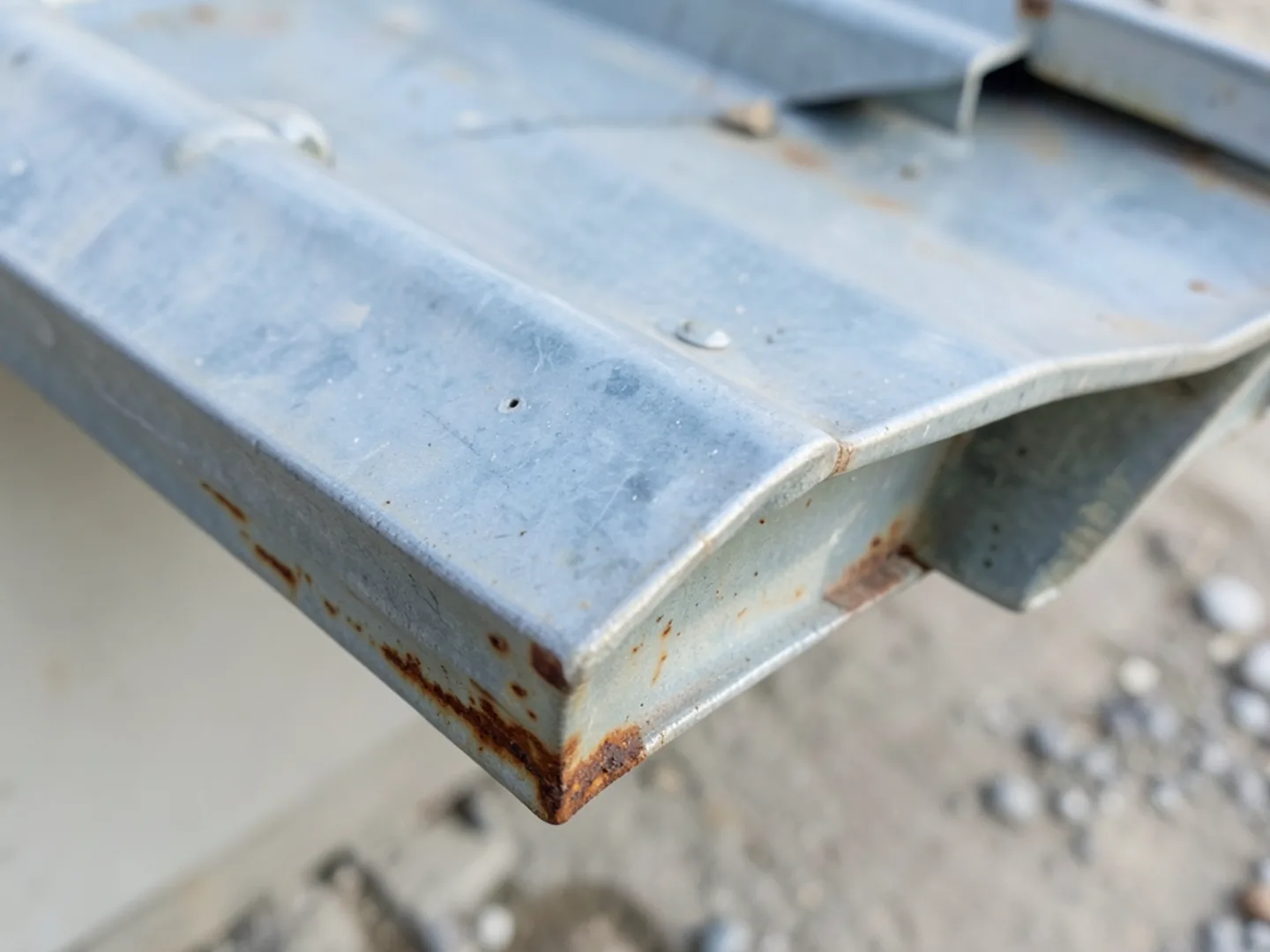
4. Metal Creasing and Hail Crushing: Once an aluminum gutter trough suffers a structural crease from a fallen oak branch or heavy tree trimmer ladders, the aluminum work-hardens and cannot be bent back into its original hydraulic shape without chronic pooling and overflow.
Repair vs. Replace Decision Matrix: 5 Clear Financial Scenarios
To help homeowners make an objective evaluation, our technicians utilize the following five-point diagnostic matrix during on-site inspections:
| Condition Observed | Diagnostic Assessment | Recommended Action | Long-Term Reliability |
|---|---|---|---|
| 1 or 2 dripping corner miters on seamless gutters | Sealant degradation from UV exposure; metal intact | Clean joint, solvent prep, apply tri-polymer sealant | High (5–8 years before resealing needed) |
| Sagging 10-foot run on continuous seamless gutter | Spike pullout or insufficient bracket spacing | Re-pitch run, install heavy-duty hidden screw hangers | High (permanent structural fix) |
| Leaks at 4+ seams on 10-foot sectional gutter runs | Thermal cycling fatigue of rubber gaskets/caulk | Full replacement with custom on-site seamless aluminum | Eliminates all mid-run leak points permanently |
| Chronic overflow during moderate rain with clean gutters | Trough undersized (5-inch) for roof square footage | Upgrade to 6-inch K-style troughs with 3x4 downspouts | Solves hydraulic volume overflow permanently |
| Fascia rot visible behind more than 20% of gutter runs | Subfascia framing failure; fasteners lose grip | Remove gutters, rebuild fascia lumber, install new gutters | Restores structural perimeter envelope |
The Hidden Trap of Repeated Patch Repairs in Gulf Coast Humidity
A frequent mistake homeowners make is hiring a handyman to apply hardware-store silicone or asphalt roofing tar over leaking gutter seams. In the Gulf Coast climate, this approach is guaranteed to fail within weeks.
Standard silicone caulk has poor peel adhesion to painted aluminum and breaks down rapidly under intense ultraviolet radiation. Asphalt roof patch hardens, oxidizes, and cracks as aluminum expands and contracts between chilly 40°F winter mornings and 140°F attic roof eaves in July. Furthermore, applying layers of silicone over wet or oxidized aluminum traps moisture underneath, accelerating corrosion.
Professional gutter repair requires stripping all compromised adhesive down to bare, clean aluminum, treating the surface with isopropyl solvent, and applying high-solids elastomeric tri-polymer sealant that retains 300% elongation capacity through extreme temperature swings.
Structural Fastener Upgrades: The Spike-and-Ferrule Elimination Protocol
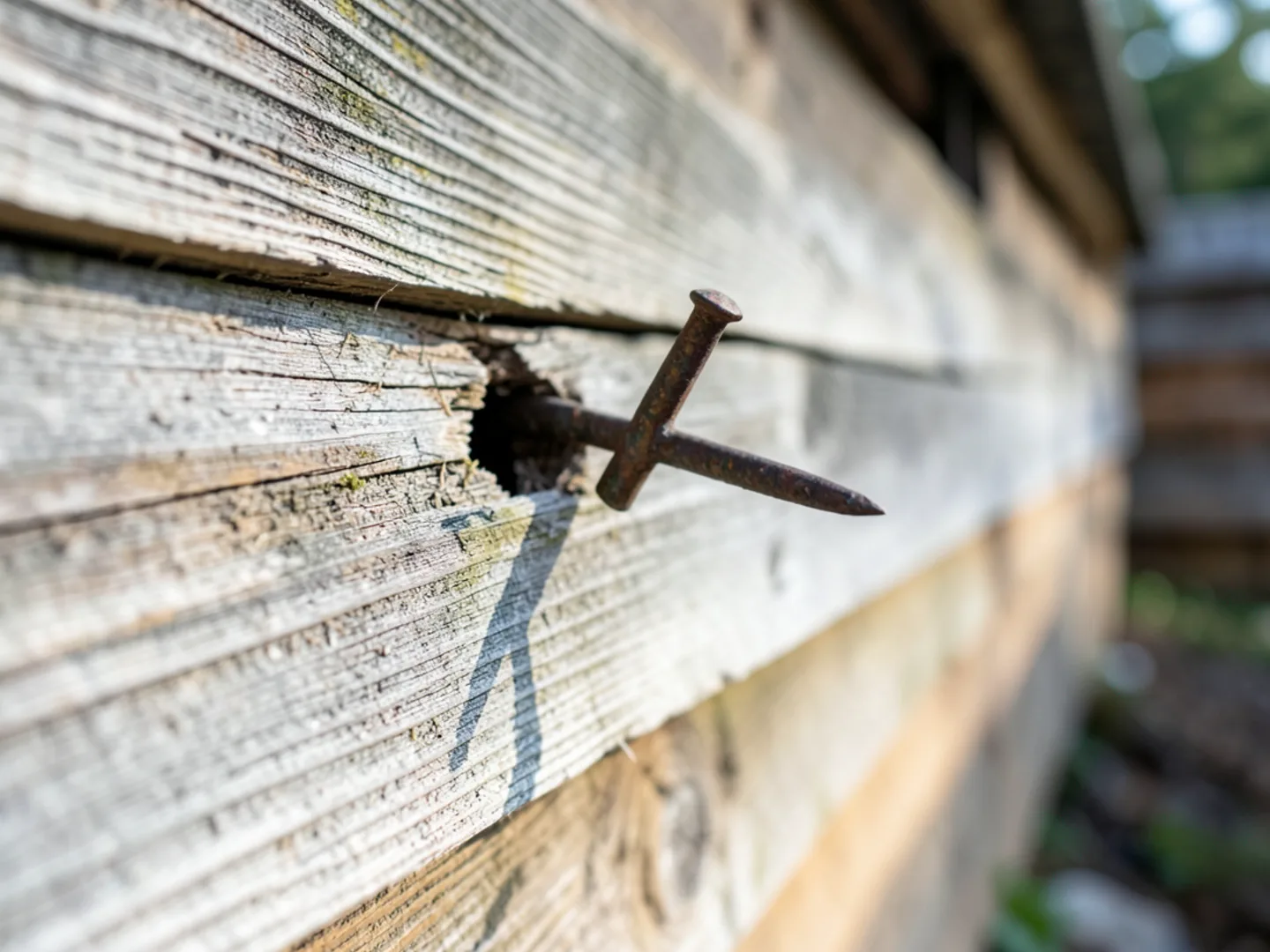
Many homes constructed in Fort Bend County between 1985 and 2005 utilized spike-and-ferrule fasteners to secure gutters. In this obsolete method, a 7-inch aluminum spike is driven through the front lip, through a hollow ferrule tube, and into the wooden fascia board.
Over time, the weight of standing rainwater (8.34 pounds per gallon) combined with timber swelling and contraction levers the smooth spike out of the wood grain by 1/4 inch to an inch. Once spikes loosen, the gutter tilts forward, water spills behind the rear lip, and the ferrule wall crushes.
During a Hydro repair pass, we completely eliminate spikes and ferrules. We extract the old nails, seal the entry holes with neoprene plugs, and install heavy-duty aluminum hidden hangers equipped with zinc-plated #10 hex-head screws driven deep into rafter tails on 24-inch centers. This locks the gutter back into rigid, level alignment without puncturing the exterior face.
Fascia Board Rehabilitation: What Lies Behind the Aluminum
The greatest danger of delaying gutter replacement is unseen moisture damage occurring behind the metal. When gutters overflow backward, water tracks down the hidden face of primed spruce or pine fascia boards.
Because the wood is trapped in perpetual darkness and humidity, rot develops rapidly beneath the exterior paint coat. Often, a homeowner believes they only have a minor gutter leak, only to discover during teardown that 40 linear feet of structural fascia has rotted completely to pulp.
When full replacement is chosen, our mobile crews inspect every linear foot of exposed fascia before hanging new seamless coil. Any compromised lumber is replaced with rot-resistant primed cedar or treated trim, painted with exterior acrylic, and flashed with aluminum drip edge to ensure the new installation rests on a pristine structural foundation.
Frequently Asked Questions: Sagging or Leaking Gutters in Katy
Practical answers from our Katy gutter technicians and drainage specialists.
Yes. Because seamless gutters are custom roll-formed on-site from continuous aluminum coil, our mobile truck can fabricate and install a single 40-foot or 60-foot seamless run to replace a storm-damaged elevation while preserving the undamaged gutters on the other sides of your home.
Related Services & Locations
Explore our full service lineup and regional service areas referenced in this guide:
Hydro Seamless Gutters Editorial Team
Written by hands-on gutter fabricators and drainage specialists based at 21707 Kingsland Blvd in Katy, TX. Focused on practical foundation protection across Fort Bend and West Harris Counties.