
Why Many Katy-Area New Builds Need Full Gutters Added
Did your new home in Elyson, Cane Island, or Cross Creek Ranch arrive with gutters only over the front door? Learn why production builders cut this corner and how to protect your slab foundation.
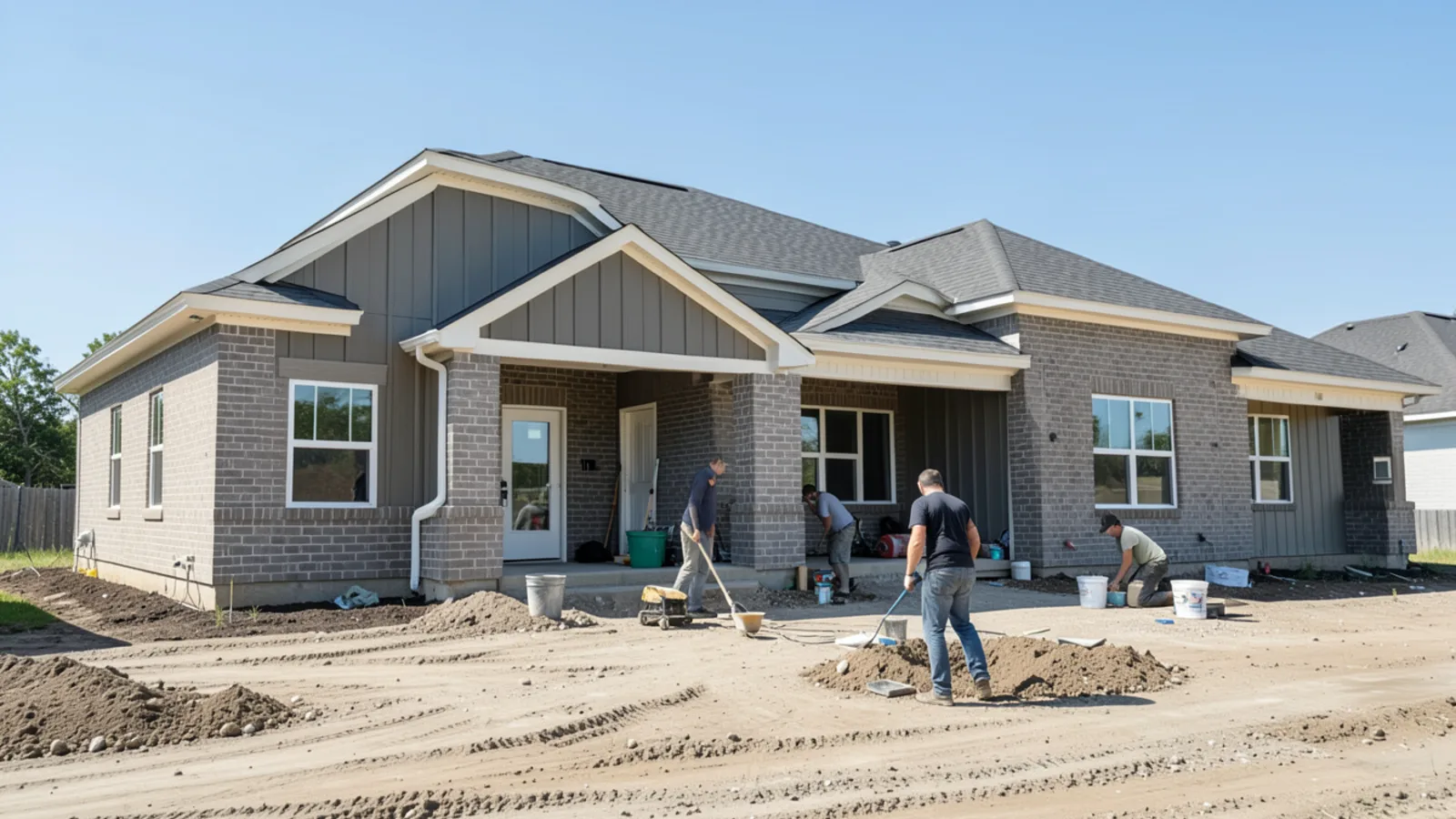
Volume production homebuilders across Katy and Fulshear routinely install gutters only over front doorways to meet minimum municipal egress codes while minimizing construction overhead. Omitting side and rear gutters leaves concrete slab foundations vulnerable to differential clay soil swelling, brick separation, and landscape erosion, making full-perimeter seamless retrofits essential for new homeowners.
- •Why Production Builders in Katy Subdivisions Install Partial Gutters
- •IRC Minimum Building Codes vs Long-Term Texas Foundation Protection
- •Differential Moisture Saturated Soil and Slab Movement Risks in West Houston
- •Engineering Specifications for Full-Perimeter Seamless Retrofit Systems
- •Step-by-Step Homeowner Checklist for New Construction Gutter Completion
- •Expert Trade-Offs: Blending with Existing Front Builder Runs vs Full Upgrades
- •Frequently Asked Questions
Why Production Builders in Katy Subdivisions Install Partial Gutters
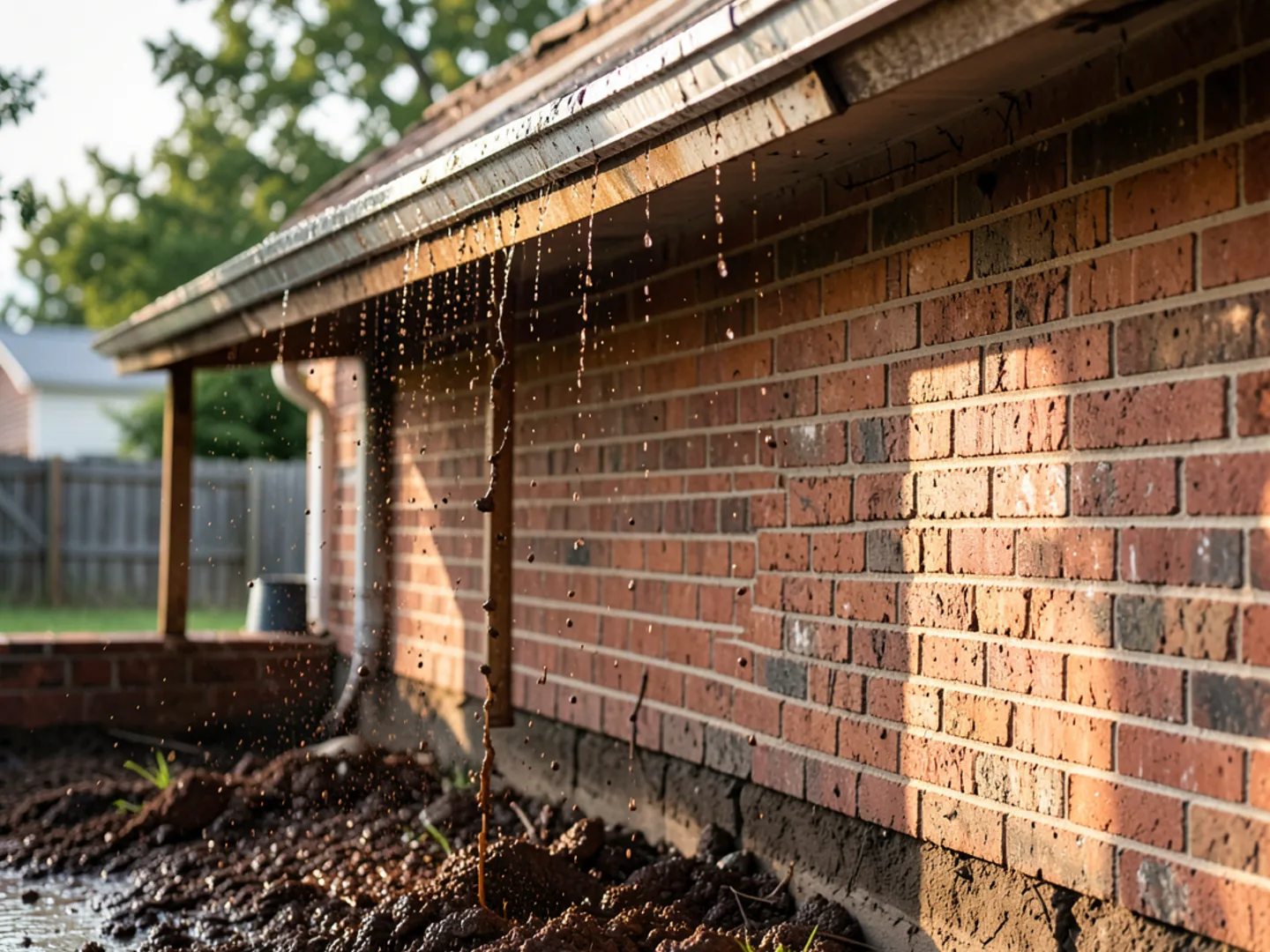
Homeowners moving into brand new master-planned subdivisions across Katy, Fulshear, and Cypress are often caught off guard during their first major rainstorm. Torrential rainwater sheets off side and rear eaves in violent waterfalls, carving trenches into freshly rolled St. Augustine sod, washing decorative mulch across driveways, and splashing thick red mud high onto exterior brick veneer.
Upon inspecting their roofline, buyers discover that their production builder installed seamless gutters only along the front entryway or front facade—leaving 60% to 75% of the total roof perimeter completely unprotected. Across premier communities like Elyson, Cane Island, Jordan Ranch, Cross Creek Ranch, and Harvest Green, this partial-gutter practice is standard volume builder protocol.
Understanding why builders take this shortcut—and the structural threat it poses to engineered slab-on-grade foundations—is critical for protecting your residential property investment.
Need Help with Your Katy Gutter Project?
Call our local technicians at (855) 633-0442 for free on-site advice, measurements, and written estimates.
IRC Minimum Building Codes vs Long-Term Texas Foundation Protection
Many new homeowners assume that because their home passed municipal building code inspections in Katy or Fulshear, it must include all essential drainage infrastructure. However, residential building codes enforce minimum safety thresholds, not optimal structural longevity.
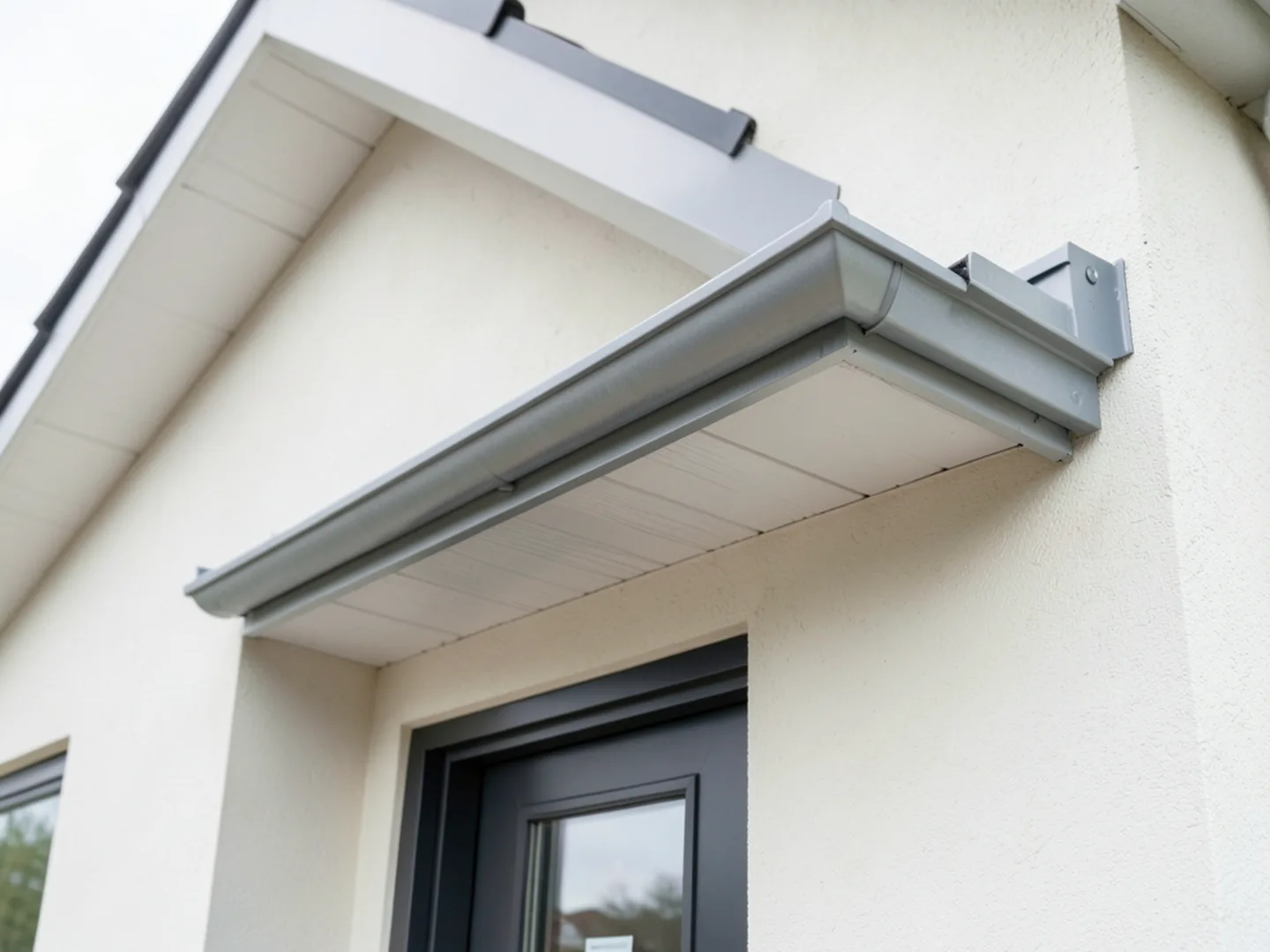
Under the International Residential Code (IRC) adopted by local municipalities, gutters are strictly required only where necessary to prevent water from impeding building egress (over the primary entrance doorway) or where roof valley configurations discharge concentrated water directly against an adjoining structural wall.
For high-volume production builders erecting hundreds of homes annually, omitting 150 to 220 linear feet of seamless aluminum gutters across side and rear elevations saves $800 to $1,500 per home in material and subcontracting costs. The builder satisfies the city building inspector, pockets the cost savings, and shifts the long-term responsibility of foundation moisture management entirely onto the buyer.
Differential Moisture Saturated Soil and Slab Movement Risks in West Houston
The fundamental danger of partial gutters lies in the unique geotechnical nature of West Houston and Fort Bend County soils. The regional ground consists predominantly of Beaumont and Lake Charles expansive clay—often referred to by local engineers as 'gumbo' clay. This soil exhibits dramatic shrink-swell characteristics, heaving forcefully when saturated and shrinking into deep fissures during hot Texas summers.
When a home has gutters only on the front elevation, rainfall from a 3,500-square-foot roof discharges unevenly. During a standard 2-inch thunderstorm, thousands of gallons of water cascade exclusively along the side and rear foundation perimeters. The soil beneath the front slab remains relatively dry, while the soil along the sides and rear becomes heavily saturated mud.
This moisture imbalance creates differential soil heave: the saturated perimeter expands and exerts upward torque on the edge of the concrete slab, while the dry front remains stationary. Over two to three years, this uneven mechanical stress causes interior drywall cracks above doorways, sticky window frames, cracked ceramic tiles, and exterior mortar joint separation.
Engineering Specifications for Full-Perimeter Seamless Retrofit Systems
Completing a home's gutter perimeter requires careful engineering to integrate new seamless runs with the existing front builder gutters while preserving architectural aesthetics and warranty standards.
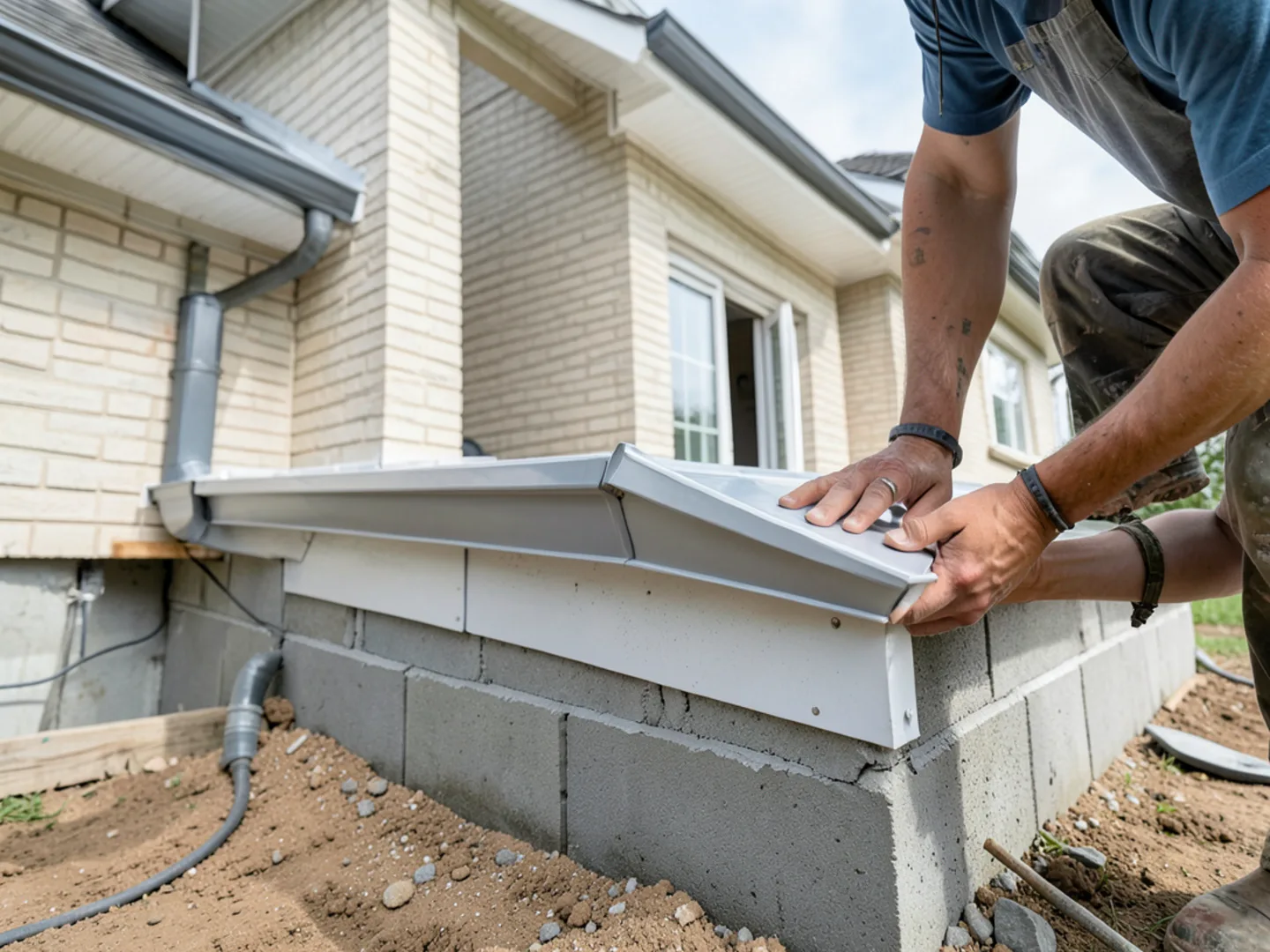
At Hydro Seamless Gutters, our technicians custom roll-form continuous .032 gauge heavy aluminum directly on your driveway. We slope side runs at a precise 1/4 inch per 10 feet toward the rear of the property, steering water away from narrow side yards where drainage easements can easily become waterlogged.
Furthermore, we utilize heavy-duty internal hidden hangers snapped securely into the front bead every 24 inches. Fasteners are driven through the subfascia into solid 2x4 rafter tails using zinc-coated structural screws, ensuring the new runs withstand severe Texas thunderstorm wind loads without pulling away.
Step-by-Step Homeowner Checklist for New Construction Gutter Completion
To complete your new home's gutter system smoothly and comply with subdivision deed restrictions, follow this contractor checklist:
| Retrofit Step | Homeowner Action Item | Contractor Best Practice |
|---|---|---|
| 1. HOA Review | Submit Architectural Review Committee (ARC) form with paint code | Provide factory enamel color chips matching trim exactly |
| 2. Eave Measurement | Walk perimeter to tally linear footage of side/rear eaves | Verify subfascia alignment, drip edge flashing, and rafter tails |
| 3. Downspout Routing | Identify non-intrusive drop locations along corners | Avoid placing drops directly above AC condenser pads or pool equipment |
| 4. Driveway Extrusion | Clear vehicle access for mobile fabrication trailer | Roll-form continuous .032 runs on site to exact millimeter dimensions |
| 5. Water & Slope Test | Observe final water test with installer | Confirm 1/4-in slope per 10 ft with zero standing water in trough |
Expert Trade-Offs: Blending with Existing Front Builder Runs vs Full Upgrades
When retrofitting a new build, homeowners face a choice: keep the builder's original front gutter and add seamless runs to the remaining three sides, or replace the entire system with high-capacity 6-inch gutters. Here are the practical trade-offs to evaluate:
If the builder installed a standard 5-inch gutter using thin .025 gauge aluminum and spaced hangers 36 inches apart, tying new 6-inch heavy .032 runs into the corners can create minor visual and volumetric mismatches. However, if budget is the primary priority, adding side and rear runs while leaving the front intact is a cost-effective solution that immediately eliminates 90% of your slab foundation risk.
For homeowners with large two-story elevations in Cane Island or Elyson, replacing the front run with a uniform 6-inch K-style system ensures maximum water carrying capacity across the entire roofline and guarantees consistent baked enamel weathering over the next two decades.
Frequently Asked Questions: Why Many Katy-Area New Builds Need Full Gutters Added
Practical answers from our Katy gutter technicians and drainage specialists.
Texas municipal building codes only mandate gutters where necessary to protect entrance doorways. Production homebuilders omit side and rear gutters to save $800 to $1,500 per house across high-volume subdivision developments, passing inspection while leaving foundation drainage to the buyer.
Related Services & Locations
Explore our full service lineup and regional service areas referenced in this guide:
Hydro Seamless Gutters Editorial Team
Written by hands-on gutter fabricators and drainage specialists based at 21707 Kingsland Blvd in Katy, TX. Focused on practical foundation protection across Fort Bend and West Harris Counties.